


 Modern Slavery Statement
Here at Banner, we’re seeing a significant increase in demand for sensory rooms. Schools to colleges, care homes to community hubs, workplaces to sporting venues. Organisations across are investing in spaces to help people with sensory processing needs feel calm, regulated and supported.
We’ve written this guide to help anyone planning on creating or upgrading a sensory room. Lauren Laurence, Manager of Business Interiors and SEN expert at Banner, highlights the type of sensory room equipment you should buy and the key factors you need to consider, alongside top tips on buying sensory supplies that meet your needs.
Sensory lighting
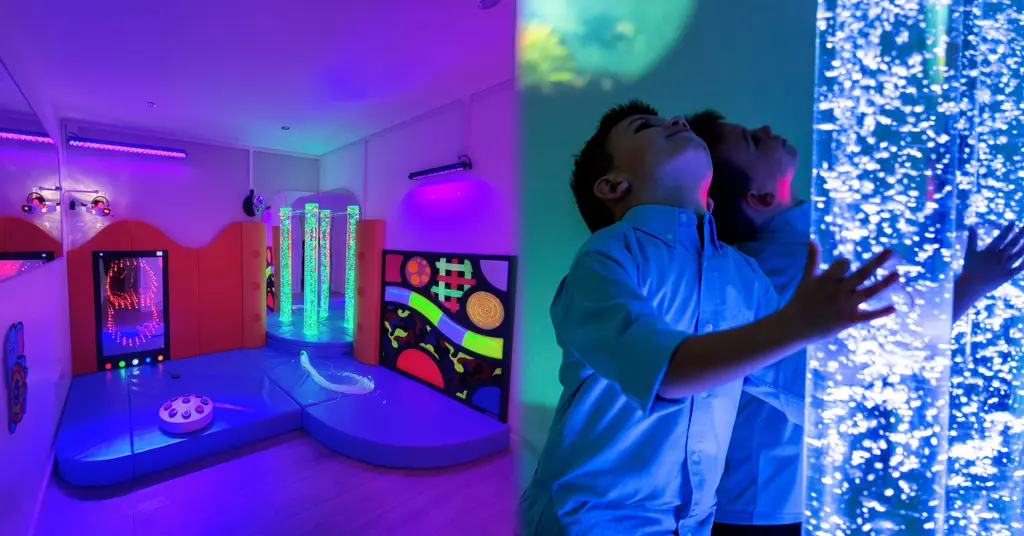
Before ordering any sensory lighting equipment, think carefully about who’ll use the room and what they need from it, as different products do very different jobs. Bubble tubes provide slow, gentle visual stimulation, while fibre optic strands are a good choice for people with physical disabilities or sensitivity to bright light, since they can be touched safely and produce no heat.
- Bubble tubes
- Fibre optic lighting and curtains
- Colour-changing LED panels
- Sensory and effects projectors (star projectors, colour wash, mirror balls)
- Blackout blinds
- Mini glitter tube sensory wands
Soft furnishings and seating
Seating and soft furnishings do far more work in a sensory room than you might think. They support physical comfort, help people feel settled and make the space safe for anyone who may move around unpredictably or need to lie down.
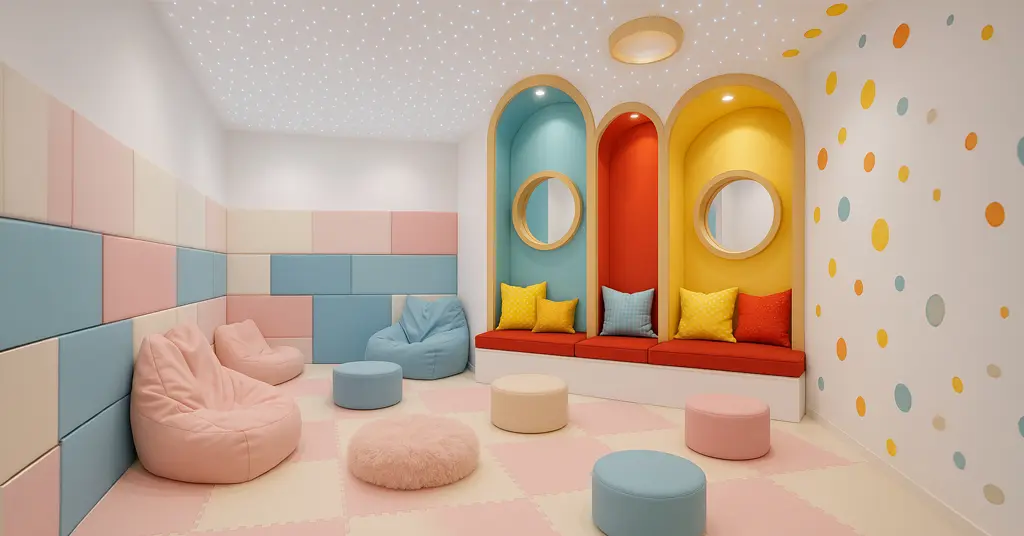
Bean bags are the most practical starting point in any sensory room. They’re affordable, easy to move and suitable for most ages and settings. Crash mats and padded wall panels can reduce the risk of injury, and sensory dens provide a quieter, more enclosed space within the room.
- Bean bags
- Soft mats and carpets
- Safety mats
- Padded wall panels
- Sensory dens and pop-up tents
- Body socks and sensory sacks
- Floor cushions and wedge cushions
- Soft play blocks
Tactile and hands-on resources
Hands-on engagement is brilliant for improving fine motor skills and coordination. For example, in care and community settings, tactile resources can help calming and occupational therapy work, while treasure baskets are a particularly good choice for early years sensory spaces.
- Fidget tools (e.g. spinners, tangles, pop-it boards)
- Tactile wall panels and texture boards
- Sensory blocks
- Sand and water trays
- Play dough and therapeutic putty
- Treasure baskets
- Textured balls and manipulation toys

Fidget Puzzle Flower Bead Design 185x110x10mm FBMFP
Colourful flower shaped colour matching game. Start with all the beads in the centre and and try matching each bead with the same colour petal, pushing them through a small gap into the correct colour…

Playlearn Tangle Junior Fidget Toy/Puzzle Assorted Pack of 4
These endlessly twistable fidget toys are a fun and functional solution for stress relief, focus, and creative play. Perfect for kids, teens, and adults…

Speks Odds Silicone Magnets Green Dots Pack of 3 Odds3DotsGreen
Audio and sound equipment
For people who are sensitive to noise, uncontrolled sound can be one of the main causes of distress. This is why it’s an essential factor in your sensory room equipment planning.
White noise machines and speakers playing calm music or nature sounds can help block out background noise effectively. On the other hand, simple instruments and sound panels can support those who benefit from stimulation rather than calm.
- White noise machines
- Ear defenders and noise-reducing headphones
- Speakers
- Instruments (e.g. chime bars, rain sticks, drums)
- Sound panels and music walls
- Sensory music apps
Weighted, deep pressure products
Weighted products work by providing deep pressure: a physical sensation that helps many people with ASD or ADHD feel settled and calm. But weighted blankets and compression garments should always be introduced with input from a qualified occupational therapist – since the right weight and duration will vary by individual. You should always seek professional advice before making your decision.
- Weighted blankets
- Therapy balls (for sitting, bouncing or rolling)
Furniture and room structure
The layout of a sensory room shapes how well everything else in it works. For instance, The Cosy Cove is a good example of a product that does more than it first appears: a soft, enclosed snug that gives users a comfortable space. It works well across early years settings, schools and any environment where people need a lower-stimulation corner within the wider space.
But ultimately, the questions that’ll drive your furniture choices are: how big the space is, who’ll be using it and what the room is mainly there for.
- Cosy dens
- Storage trolleys
- Room dividers and soft screens
- Accessible furniture including height-adjustable tables for wheelchair users

Our sensory room equipment buying guide
Engage with SEN specialists, occupational therapists and actual users
The most useful advice I can share on buying sensory room equipment is to start with a needs assessment, not a shopping list. Before ordering anything, talk to whoever leads on SEN or care provision in your setting, any occupational therapists working with your users and, where it makes sense, the people who will use the room or their families. The sensory room equipment mix for a small school for children with complex needs will be completely different from a care home that wants to build a calm space for residents, or a sports venue creating a quiet room for fans with sensory needs. Missing the mark on this could waste your budget and could produce a room that just doesn’t work.
Establish exactly who and what the sensory room is designed to support
Think carefully about who will use the room and what for. A room designed mainly for calming needs softer lighting, quieter textures and fewer interactive elements. A room set up for occupational therapy sessions needs space to move and the right equipment for that work. A room used for active sensory play is different again. Where you can, be clear about the room’s main purpose before choosing equipment. If it does need to serve more than one purpose, think carefully about how to separate those uses within the space.
Choose sensory equipment in line with your budget
At Banner, we understand that most organisations cannot equip a full sensory room in one go. That’s not a problem. Starting with a few high-impact, lower-cost items gives you a working space quickly. Good lighting, a couple of bean bags and a core selection of tactile resources are a solid foundation. But if you’re ready to create the whole room, then we’re here to support you either way.

Why choose Banner to supply your sensory room equipment?
We’ve worked with schools, colleges and organisations across the UK for more than 40 years. With a dedicated education team alongside our wider expertise across facilities supplies, technology, interiors and beyond, we can support your full sensory room project. Rather than managing several different suppliers, you can bring furniture, lighting, tactile resources, technology and supplies together through a single Banner account. That means less administration and fewer purchase orders to manage.
For schools and colleges, we’re listed on CPC Lot 5, allowing sensory room furniture to be purchased through a named, compliant route with no tender process required. We’re also listed on frameworks like GCA (previously CCS) RM6299, Crescent Purchasing Consortium (CPC) and the Education Buying Group. For more information on this, read our full framework list.
To find out how we can deliver your sensory room, get in touch with our experts or browse our full range of supplies in the Banner Shop.

Newland House
Tuscany Park
Normanton
Wakefield
West Yorkshire
WF6 2TZ

0843 538 311 (UK)
1800 905 907 (ROI)
Store






Banner Group Limited. Registered in England and Wales: 05510758
Our registered office is: Newland House, Tuscany Park, Wakefield, WF6 2TZ