


 Modern Slavery Statement
Period poverty in education is a real and pressing issue across the UK. In schools, it can mean pupils missing lessons or sitting in discomfort because they have no access to a pad or tampon. In universities, it often looks like students making difficult financial trade-offs, choosing between essential products and everyday costs. But for both settings, there is a great deal that institutions can do.
Kim Riley is a Facilities Supplies Specialist and period product expert here at Banner. Having managed national accounts within large government organisations, Kim has seen firsthand how access to essential period products shapes people’s dignity and day-to-day experience. In this blog, she’s shared exactly how schools and universities can take meaningful action to tackle period poverty.
Access to period products in education is both a wellbeing issue and an equality issue, and institutions that treat it as such are already making a real difference. If your school or university isn’t working to reduce period poverty, you absolutely need to start.
How Does Period Poverty Impact Students?
The impact goes well beyond physical discomfort. In my experience, and in line with the latest evidence, lack of access to period products affects students across every part of their education.
The most direct consequence of period poverty is attendance. Research by Plan International UK found that 64% of girls have missed a part day or an entire day of education because of their period. For school pupils, this problem is worsened by age and financial dependence. Many are still navigating puberty, may feel unable to speak to a teacher, and have limited means to buy products themselves.
At university, the pressures are different but equally serious. Students managing their own finances for the first time can find period products squeezed out by the cost of living. A student who’s stressed about meeting a basic need will likely struggle with their personal well-being, let alone focus on their studies.
Across both settings, the mental health impact is significant. The anxiety of potentially leaking, the embarrassment of having to ask, and the stigma that can still surround menstruation all chip away at confidence. For younger pupils still building their sense of self, that stigma can have a lasting effect. There’s also a health dimension worth noting: when products are unavailable, some students will extend the use of a single tampon or pad beyond what is safe, which carries genuine health risks.
The good news is that schools and universities are well placed to act. I’ve put together my practical guidance for each below.
What Can Schools Do to Address Period Poverty?
Schools serve some of the youngest and most vulnerable students affected by period poverty. Here’s some advice on where you should start:
- Understand your legislative position. In Scotland, the Period Products (Free Provision) Act 2021 places a legal duty on schools to make free products available to anyone who needs them. In Wales, the Period Proud Wales initiative provides strong national guidance encouraging free provision in education. England and Northern Ireland have no equivalent legislation, but many schools are acting voluntarily and building the case from within their own wellbeing strategies.
- Make access discreet and straightforward. Products kept behind a reception desk or are only available by asking a member of staff create a barrier. Self-serve dispensers in toilet cubicles, including gender-neutral and accessible facilities, allow pupils to access what they need without any interaction or embarrassment.
- Choose products with care. Offer a range that reflects different needs and preferences. Organic, biodegradable single-use products are a strong choice for balancing practicality with environmental responsibility. Introducing reusable options alongside disposables broadens choice and reduces long-term cost. Here at Banner, our period products range covers organic cotton pads and tampons, reusable pads, menstrual cups and period pants, all ethically sourced.
- Combine products with education. Provision on its own is only part of the picture. Weaving period education into PSHE lessons and wider wellbeing programmes helps reduce stigma and builds confidence. For example, when supporting New College Lanarkshire, Banner didn’t just supply the college’s period products, we also led pop-up stalls, class talks and tutorials. Feedback from students was overwhelmingly positive, with many saying they had learned things about their own health they had never been taught before.
- Involve pastoral and welfare staff. Facilities teams cannot do this alone. Teachers, school nurses and pastoral leads are best placed to identify pupils in need, signpost what is available, and model a culture where periods are spoken about without shame.

What Can Universities Do to Address Period Poverty?
Universities are larger and more complex than schools, with more diverse student populations and, often, sharper financial pressures among their students. But they also tend to have stronger wellbeing infrastructure and greater procurement capacity. Here’s how to make the most of that.
- Start by speaking to your students and staff. Before designing any scheme, find out what students actually need. Anonymous surveys and conversations through student unions or welfare teams will give you a far more accurate picture than assumptions alone. This step is crucial and often skipped.
- Audit your estate. A large campus can have hundreds of toilet facilities spread across buildings, residences, libraries and sports centres. Map what you have, identify gaps, and prioritise the highest-footfall areas first. Provisions limited to a few central locations will not reach everyone who needs it.
- Use frameworks for efficient procurement. For Scottish universities, Banner supplies period products through APUC’s JAN1011 AP: Cleaning and Janitorial Products Framework, providing a compliant and streamlined procurement route. For instance, both the University of Dundee and New College Lanarkshire used this route to consolidate their product supply, reduce costs and improve sustainability outcomes. If your university is interested, contact us and we can advise on the most suitable procurement route for your setting.
- Make reusable products part of your offer. University students tend to be more engaged with sustainability than younger pupils, and many are genuinely open to reusable options when they have the right information. The University of Dundee worked with us to successfully introduce a comprehensive range across its campuses, available in female, male and gender-neutral toilets. This helped the university deliver strong environmental returns, as using a menstrual cup saves approximately 7kg of CO2 per person per year compared to disposables.
- Design for dignity. Students should be able to access products without judgment or visibility. In our experience, self-serve dispensers and discreet ordering options both make a real difference to uptake.
- Engage student unions from the outset. Student unions know what students are experiencing. Involving them in the design and communication of your period product scheme means it’s far more likely to meet real needs and reach the people who need it most.

Checklist: Our Action Plan for Tackling Period Poverty
Whether you’re a school or a university, this checklist will give you a clear starting point.
- Talk to your students and staff. Use anonymous surveys and conversations with welfare teams to understand the scale of need and where it is most acute.
- Audit your school, college or university. Map your existing provision across every toilet facility on site and identify where the gaps are.
- Know your legislative context. Understand what laws or national frameworks apply to your institution, as this will shape your obligations and strengthens the case for funding.
- Define your product range. Decide on the mix of single-use and reusable products that suits your student population and budget and engage a specialist supplier (like Banner) early.
- Design for accessibility. Plan for self-serve, discreet dispensers in all relevant facilities, including gender-neutral and accessible toilets.
- Communicate and educate. Let students and staff know what’s available and share educational content, whether through PSHE lessons in schools or wellbeing events in universities.
- Set up reliable replenishment. Agree clear processes with your supplier so dispensers are never left empty.
- Review regularly. Check in at least twice a year, gather feedback, and keep improving.
How Banner Can Help Reduce Period Poverty in Your School or University
At Banner, period poverty is an issue that we genuinely care about. We understand that every school and university is different, with its own specific estate, student population and budget. What they all share is a responsibility to make sure period poverty does not stand in the way of learning.
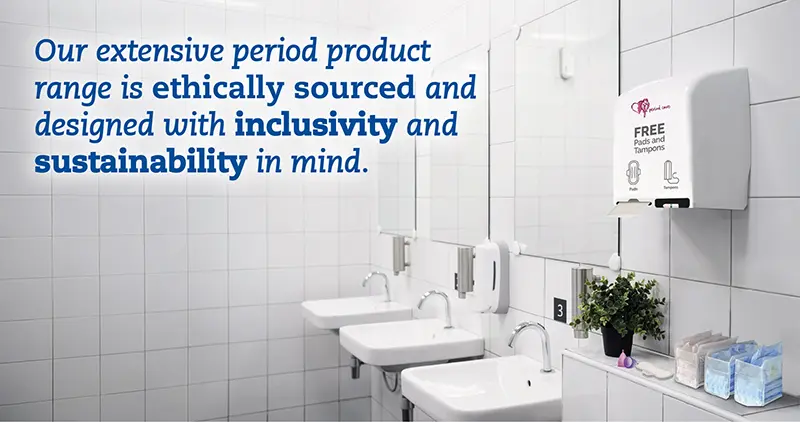
Our period products range is ethically sourced and designed with inclusivity and sustainability in mind, covering everything from organic cotton tampons and pads to menstrual cups, period pants and reusable pads. We offer dedicated account management, procurement support, and educational resources to help your scheme go beyond simply stocking a dispenser.
Our partnerships with institutions like the University of Dundee and New College Lanarkshire are great examples of what’s possible: reliable access to dignified, sustainable products, meaningful reductions in waste, and students who feel genuinely supported.
If your institution is ready to take the next step, we’re here to help. Get in touch with the Banner team today to find out how.